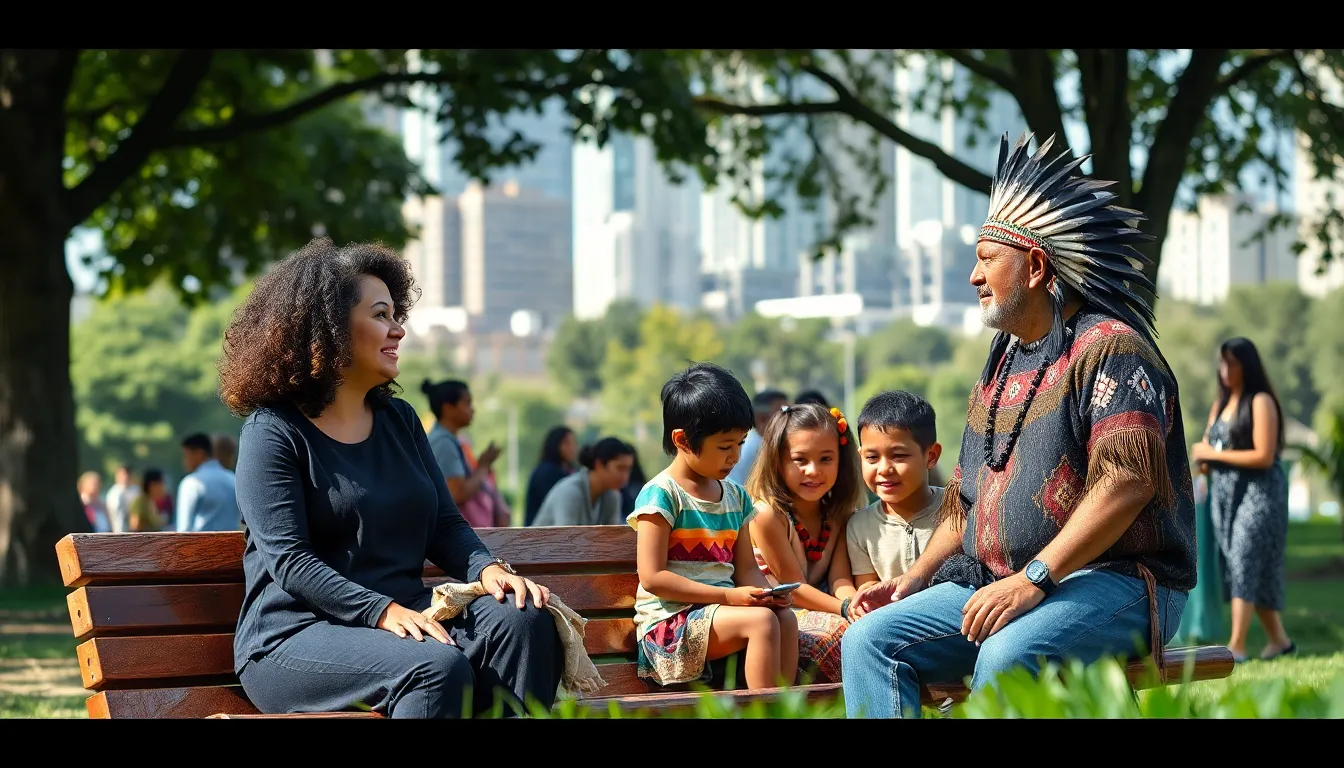
In a world bursting with diverse cultures, gender roles can feel like a never-ending game of “Guess Who?” One moment he’s wearing a suit and tie in a corporate boardroom, and the next she’s donning traditional attire at a vibrant festival. Each culture has its own set of expectations, and navigating these can be as tricky as balancing a book on your head while juggling.
Table of Contents
ToggleOverview of Gender Roles
Gender roles differ significantly across cultures. Traditional expectations often dictate behavior based on one’s sex. In many societies, men typically assume responsibilities like providing for the family, while women often take on caregiving tasks. These roles can evolve, changing with economic and social advancements.
Cultural contexts shape perceptions of masculinity and femininity. For instance, in some Indigenous cultures, gender roles are more fluid, allowing individuals to express their identity beyond binary definitions. This contrasts with Western cultures, where gender identities are often rigidly categorized.
Social norms also influence gender roles. Countries with strong patriarchal structures tend to limit women’s empowerment, restricting their participation in leadership and decision-making. Conversely, in Scandinavian nations, gender equality initiatives have led to greater independence for women, resulting in a more balanced division of labor.
Religious beliefs further impact gender expectations. In Abrahamic faiths, specific roles are often assigned based on interpretations of sacred texts. Similar practices exist in other belief systems, perpetuating traditional roles for men and women within the family structure.
Historical events contribute to changing attitudes. The feminist movements during the 20th century challenged conventional roles, advocating for shared responsibilities. These changes have sparked debates on the evolution of gender identity, especially in regions where traditional norms remain dominant.
Influences of globalization introduce new concepts of gender. Exposure to different cultures via travel and media can reshape local perceptions. This cross-pollination of ideas encourages discussions about equality, pushing societies to reconsider established gender roles.
Historical Perspectives on Gender Roles
Examining historical contexts reveals how gender roles evolved over time across different cultures. Ancient civilizations set foundational expectations that often dictated behavior for centuries, while the Middle Ages introduced new complexities in social structures.
Gender Roles in Ancient Civilizations
In ancient Egypt, men often served as primary providers, while women managed the household. Women held significant rights, including property ownership, expressing a more balanced power dynamic than in some other cultures. Mesopotamian societies typically enforced strict roles where men engaged in politics and warfare. Women focused largely on domestic responsibilities, with exceptions in priestly roles showcasing some fluidity. Ancient Greece portrayed stark contrasts, where men participated in public life while women remained largely confined to the home, reflecting early cultural dichotomies in gender.
Gender Roles in the Middle Ages
The Middle Ages marked a shift in gender roles, influenced by feudal systems. Men generally occupied positions of power, engaging in land ownership and military service. Women, with limited rights, largely managed homes and cared for children. However, noblewomen occasionally held authority, administering estates in their husbands’ absence. Religious institutions also shaped gender dynamics, as nuns found opportunities for education and leadership, providing pathways for women’s influence. Overall, societal stratification during this period highlighted distinct roles while also allowing for intermittent deviations from traditional expectations.
Contemporary Gender Roles
Contemporary gender roles reflect diverse cultural influences and societal changes. Understanding these roles requires examining specific cultural contexts.
Gender Roles in Western Cultures
In Western societies, gender roles often emphasize equality and individualism. Men typically occupy positions in leadership and decision-making, while women increasingly take on careers alongside family responsibilities. The influence of feminism has reshaped perceptions, challenging traditional norms. Over the past few decades, women have gained significant advancements in rights and opportunities, leading to greater participation in various fields. Media representation has also played a crucial role in promoting diverse gender expressions. Nonetheless, stereotypes persist, particularly in industries like technology and engineering, where men remain overrepresented. Overall, Western cultures continue to navigate the balance between traditional expectations and modern values.
Gender Roles in Eastern Cultures
Eastern cultures exhibit a complex interplay of tradition and modernity in their gender roles. Many societies uphold distinct expectations, with men often seen as providers and women as caretakers. However, economic growth has led to shifts in these norms. More women now pursue education and careers, challenging conventional roles. In countries like Japan, traditional views still influence workplace participation, but there’s a growing recognition of gender equality. Social movements advocate for women’s rights, yet cultural and religious traditions can impose limitations. As globalization impacts these societies, evolving gender norms encourage dialogues around equality and representation, gradually transforming perspectives on gender roles.
Impact of Globalization on Gender Roles
Globalization significantly alters traditional gender roles across cultures. Exposure to diverse ideas fosters shifts in perceptions about gender and empowers individuals to challenge conventional norms. Western media often portrays progressive gender standards, impacting societies worldwide and motivating discussions on equality.
Technological advancements facilitate communication and the exchange of cultural narratives, enabling marginalized voices to emerge. In many nations, this dialogue encourages a reevaluation of gender roles, leading to greater acceptance of non-binary identities and fluid expressions of gender.
While some communities adopt egalitarian practices, others resist these changes. Resistance often stems from deeply rooted cultural and religious beliefs that uphold patriarchal structures. Consequently, the impact of globalization varies, with urban areas typically experiencing faster shifts than rural settings.
Economic factors also play a crucial role in reshaping gender dynamics. Women participating in the workforce drives changes in societal expectations, challenging the traditional male-provider model. Countries experiencing rapid economic growth often witness women’s empowerment, reflecting a growing recognition of their contributions.
Importantly, local movements and organizations amplify these changes. In Scandinavia, for example, advocacy for gender equality has led to remarkable progress, serving as a model for other regions. Grassroots initiatives across the globe similarly aim to educate and reform, fostering an environment where diverse expressions of gender are accepted.
Ultimately, globalization creates spaces for dialogue and reflection, influencing gender roles in profound ways. Cultural intersections prompt questioning of established norms, encouraging societies to consider alternative perspectives on gender and identity.
Case Studies of Gender Roles in Different Cultures
Examining gender roles across diverse cultures reveals fascinating contrasts and similarities. These studies highlight the complex expectations often shaped by historical and social contexts.
Gender Roles in Indigenous Cultures
Indigenous cultures often exhibit more fluid gender roles compared to mainstream societies. Communities may embrace various gender identities, recognizing the importance of social harmony and collective responsibility. For instance, many Native American tribes acknowledge Two-Spirit individuals, who embody both masculine and feminine qualities. In these cultures, tasks may not strictly adhere to gender; men and women might share roles in hunting, gathering, and caregiving. These flexible arrangements allow for a deeper understanding of gender beyond binary norms.
Gender Roles in Urban vs. Rural Settings
Urban settings typically present different gender dynamics than rural environments. Cities often promote more progressive attitudes towards gender roles, fostering opportunities for women in the workforce and leadership positions. In contrast, traditional expectations still dominate rural areas, where men often assume the role of primary breadwinners, while women manage household responsibilities. Social mobility in urban areas encourages individuals to challenge outdated norms. However, both environments face ongoing debates over gender equality, revealing the varying impacts of location on societal perceptions of gender.